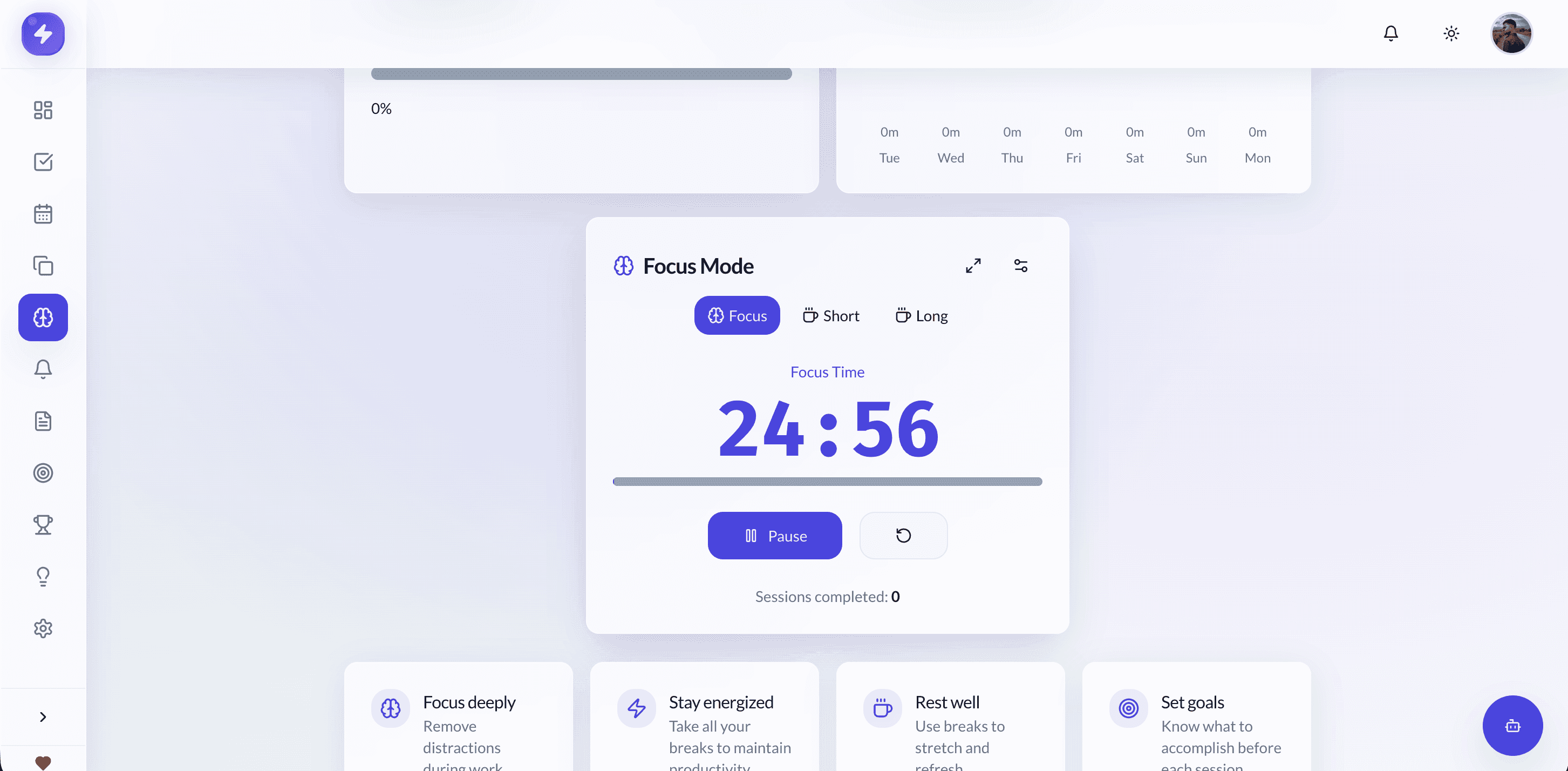
WorkOS – Next-Gen Work Operating System
A full-stack SaaS platform built with React and TypeScript that unifies tasks, goals, analytics, and AI to optimize modern workflows.
Case Study
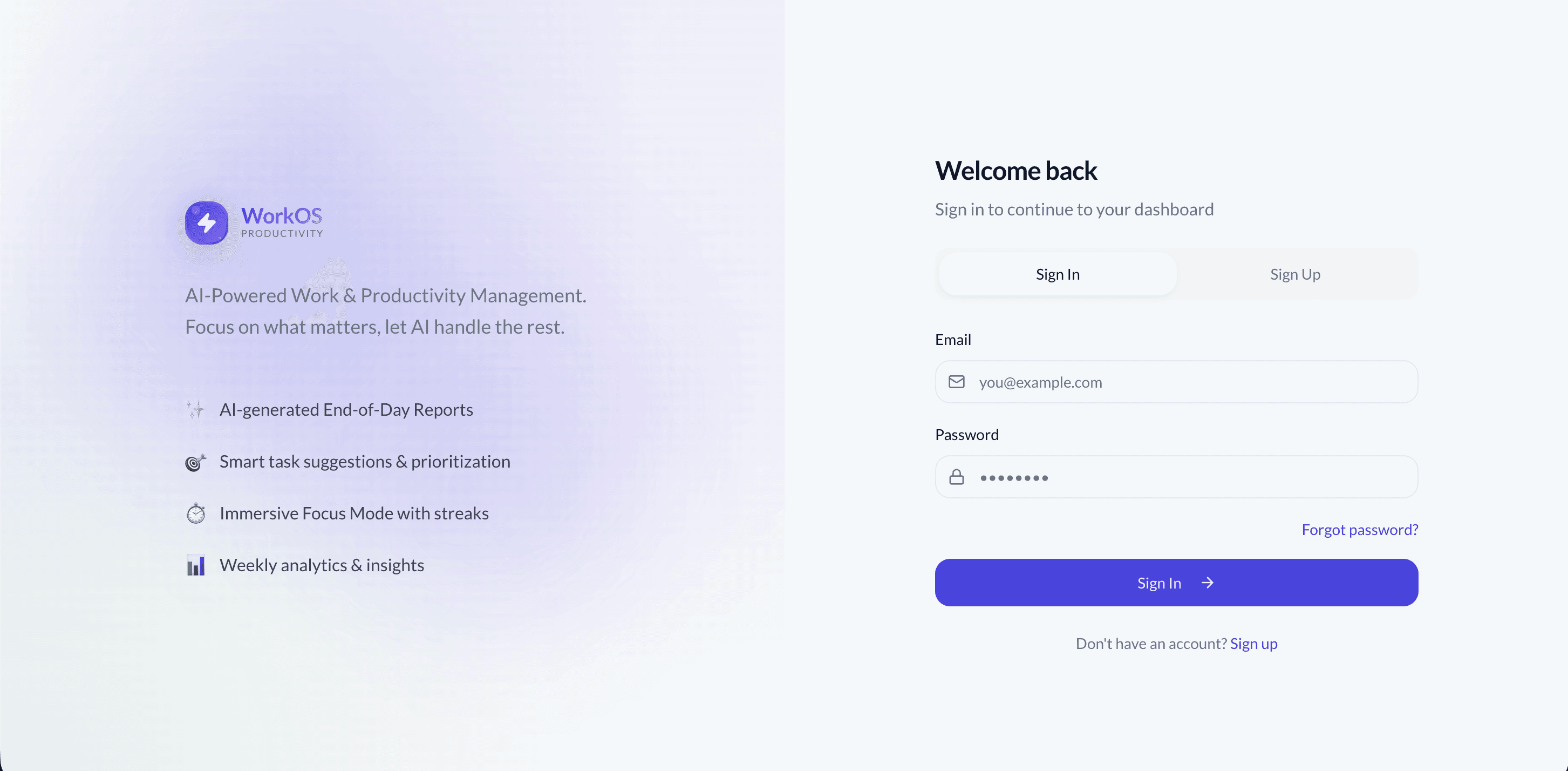
In today’s fast-paced digital world, productivity is often fragmented across multiple tools—task managers, note apps, analytics dashboards, and communication platforms. This fragmentation leads to inefficiency, context switching, and ultimately, reduced performance.
To address this growing challenge, I developed WorkOS, a comprehensive work operating system designed to unify task management, performance analytics, AI assistance, and daily workflow optimization into a single, seamless platform.
🔗 Live Product: https://workos.itsmandeep.in
📌 Project Overview
WorkOS is a modern SaaS-based productivity platform built to streamline how individuals and teams manage their daily work. Developed as a self-initiated project, it reflects both a personal need and a broader market gap in unified work management systems.
The platform is currently live and under active development, having reached a feature-complete MVP stage within just two months. Built using a modern tech stack centered around TypeScript and React, WorkOS delivers high performance, scalability, and an intuitive user experience.
🎯 The Problem: Fragmented Productivity Systems
Modern professionals rely on multiple disconnected tools such as spreadsheets, task managers, and note-taking apps. This creates several challenges:
Constant context switching between platforms
Lack of centralized data and insights
Time-consuming manual reporting (especially end-of-day reports)
Poor alignment between daily tasks and long-term goals
No actionable analytics for performance improvement
This inefficiency is amplified in remote and hybrid work environments, where visibility and structure are critical.
💡 The Solution: One Platform for Everything
WorkOS was built on a simple but powerful idea: replace multiple tools with one unified system.
Instead of solving isolated problems, the platform integrates all essential work management components into a layered architecture:
A core management layer handling tasks, reminders, and goals
An intelligence layer providing analytics, reports, and AI assistance
A user experience layer focused on simplicity, speed, and responsiveness
A secure infrastructure layer ensuring data privacy and scalability
This “all-in-one” approach reduces tool dependency and creates a single source of truth for all work-related activities.
⚙️ Technology & Architecture
WorkOS follows a modern JAMstack architecture combined with Backend-as-a-Service (BaaS). The system is designed to be fast, scalable, and developer-friendly.
Frontend Stack:
React 18 with TypeScript ensures type safety and maintainability, while Tailwind CSS enables responsive, mobile-first design. Vite is used for ultra-fast builds and optimized performance.
Backend & Database:
The backend is powered by Supabase, leveraging PostgreSQL for structured data storage, real-time subscriptions, and built-in authentication.
State & Data Handling:
Zustand manages global state efficiently, while React Query handles data fetching, caching, and synchronization.
Deployment:
The application is deployed across global CDNs using Netlify and Vercel, ensuring high availability and low latency.
🚀 Core Features
WorkOS delivers a comprehensive feature set that covers the entire productivity lifecycle.
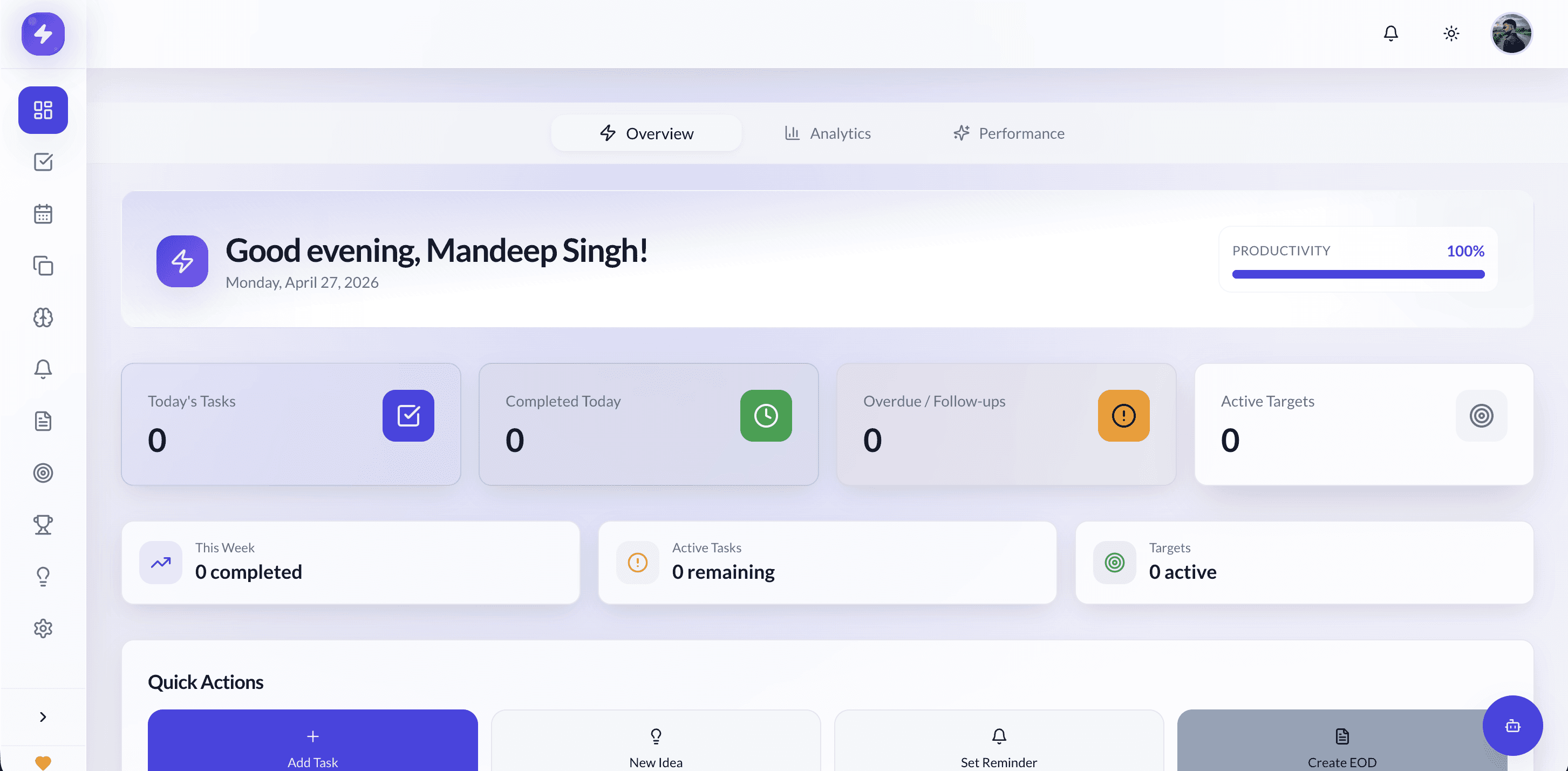
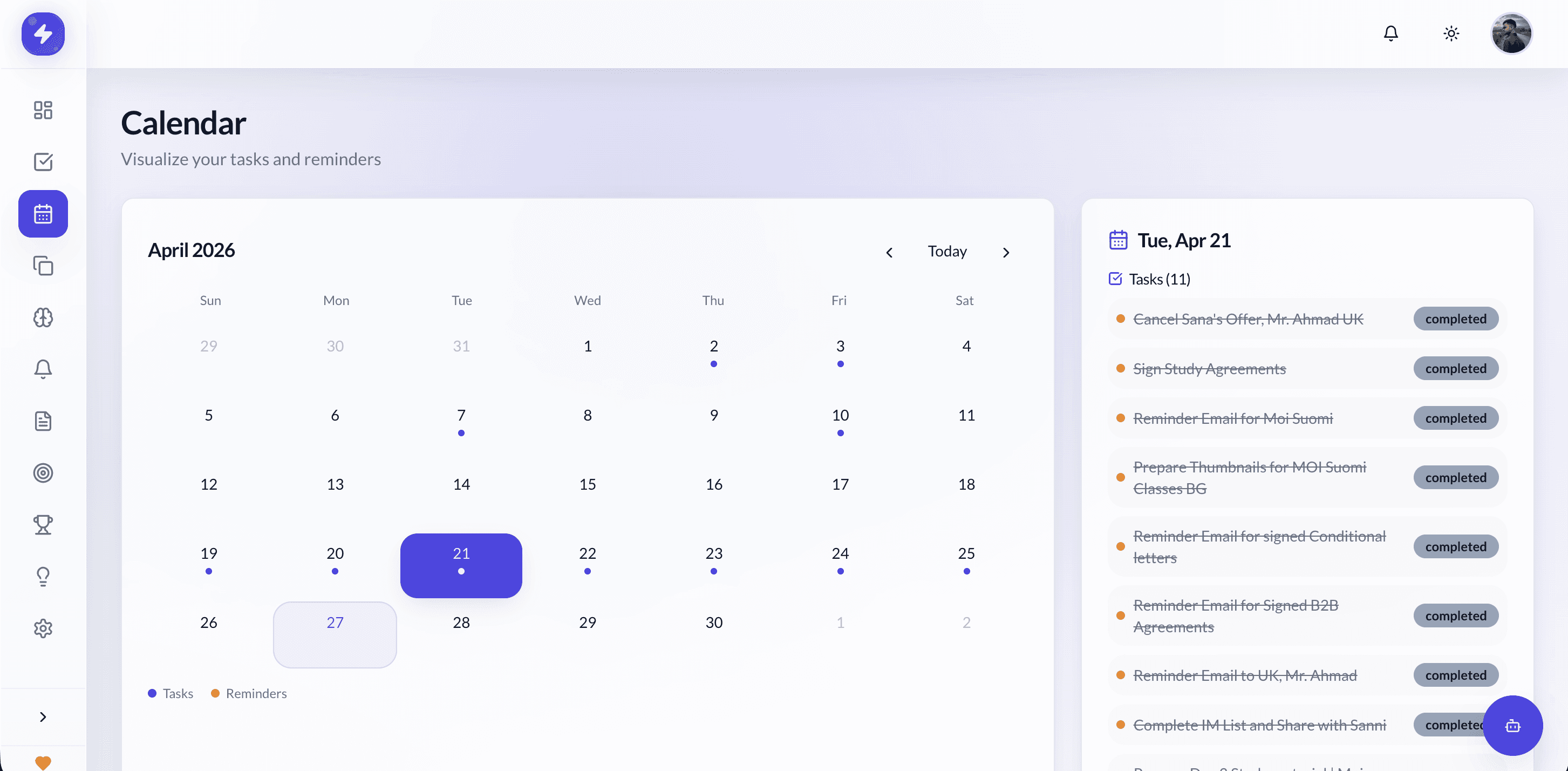
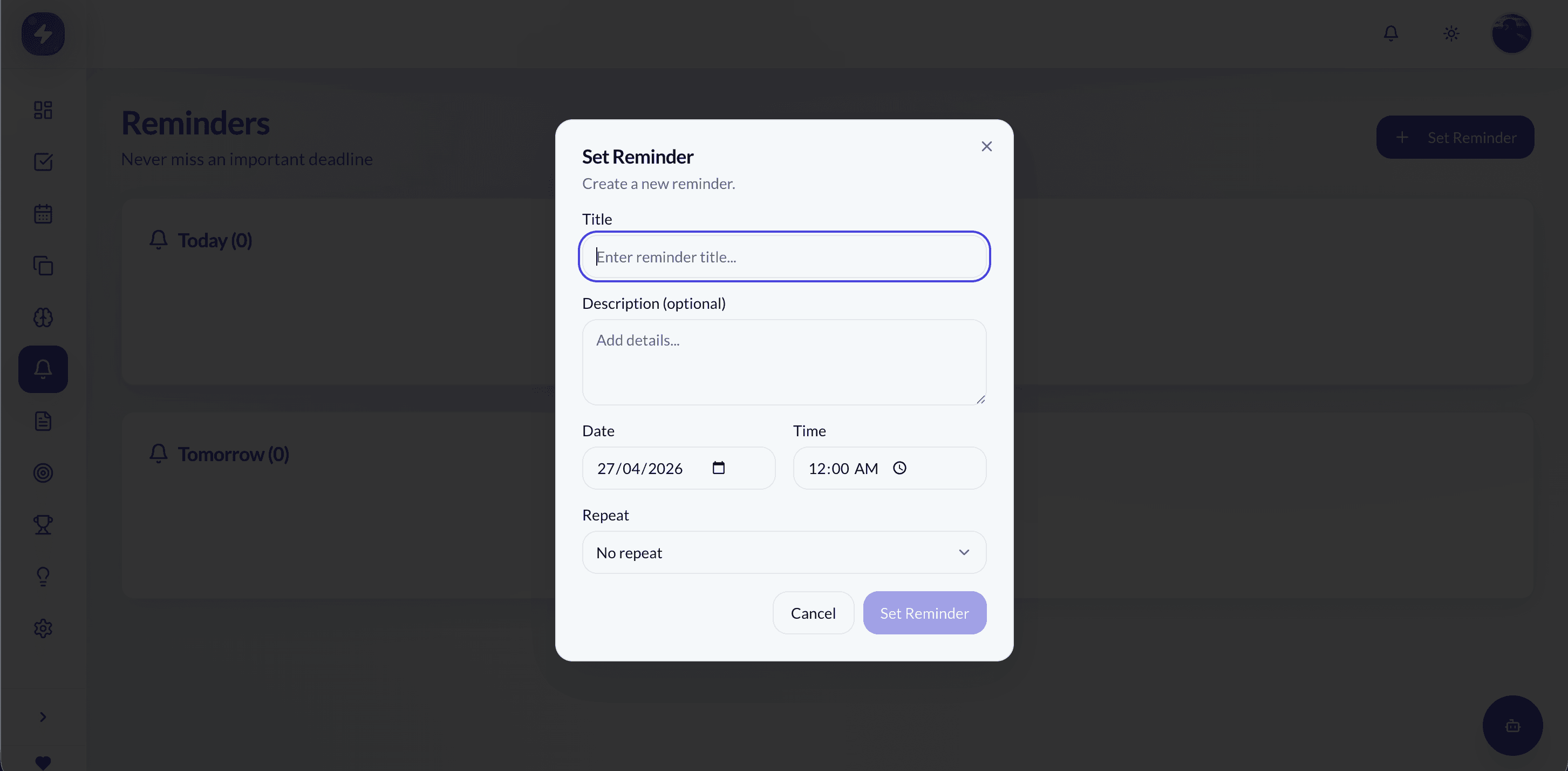
The platform includes task management, reminders, goal tracking, analytics dashboards, and AI-powered assistance. Users can create and manage tasks, align them with goals, and track progress in real time.
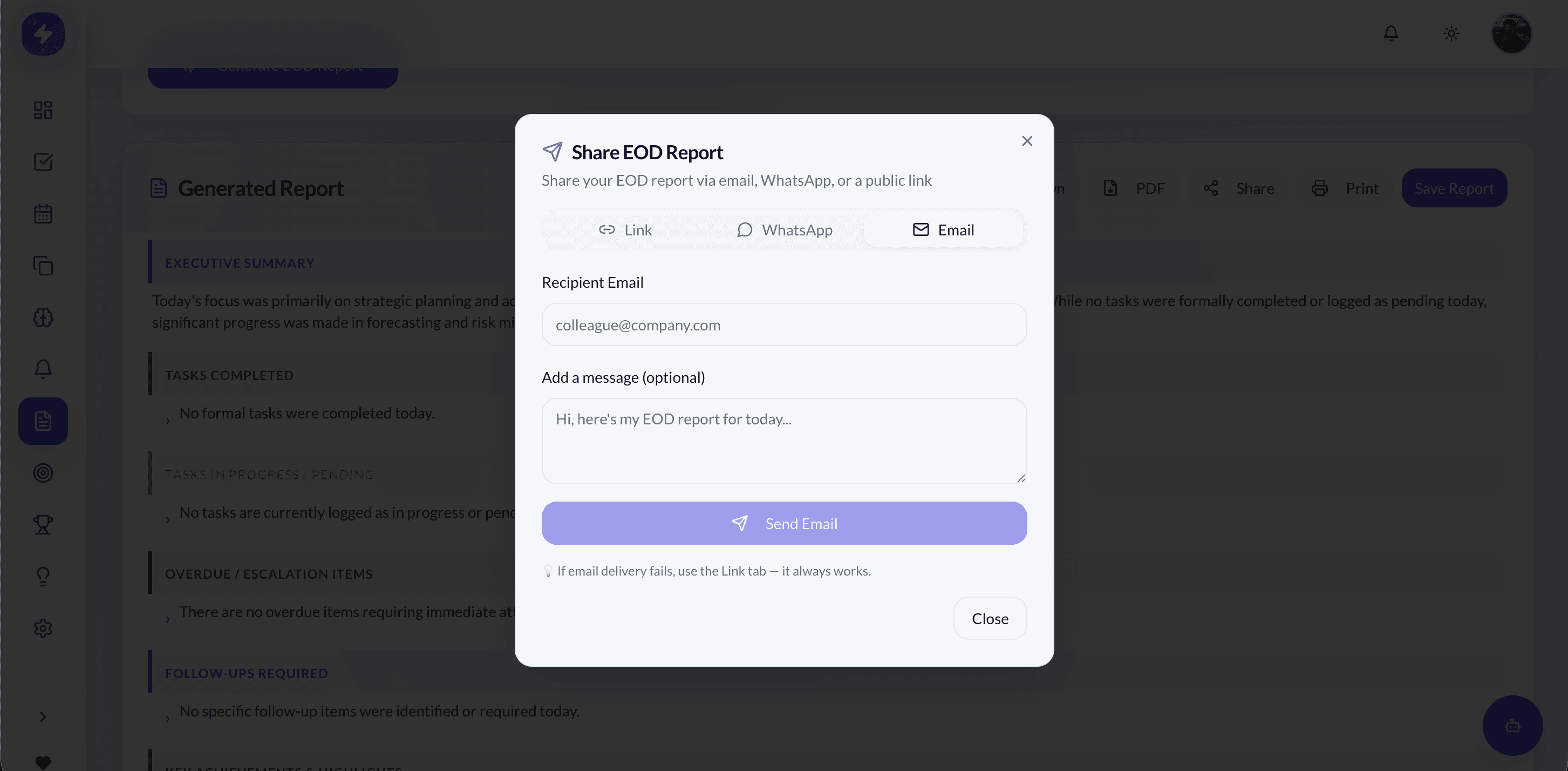
One of the standout features is the AI-powered End-of-Day (EOD) report generator, which automates daily reporting—reducing manual effort by up to 90%.
Additionally, the platform provides:
Real-time analytics dashboards with productivity insights
A distraction-free focus mode
Calendar visualization for planning
Idea capture for knowledge management
Exportable reports in PDF and Excel formats
All features are fully responsive, ensuring a seamless experience across mobile, tablet, and desktop devices.
🧠 Intelligent Productivity with AI
A key differentiator of WorkOS is its integration of AI-driven capabilities.
The built-in assistant helps users with smart suggestions, contextual reminders, and automated reporting. Instead of merely tracking work, the system actively supports decision-making and productivity improvement.
This aligns with the broader shift toward AI-augmented workflows in modern SaaS applications.
📊 Results & Impact
The project has already delivered measurable improvements in productivity and efficiency:
Reduced daily administrative work by ~78%
Cut EOD reporting time from 20 minutes to 2 minutes
Consolidated 5+ tools into a single platform
Achieved 95+ performance score and sub-2-second load time
Delivered 16+ fully functional core features
From a development perspective, leveraging AI-assisted tools accelerated the build process significantly—reducing development time by nearly half.
⚠️ Challenges & Learnings
Like any full-stack project, WorkOS presented several technical and design challenges.
Managing state across multiple interconnected features required a shift to centralized state management. Real-time synchronization demanded careful handling of data consistency using Supabase subscriptions.
Performance optimization became critical when handling large datasets for analytics, leading to the implementation of pagination, lazy loading, and query optimization.
One of the biggest takeaways from this project was the importance of planning architecture and design systems early, as well as the transformative impact of AI-assisted development on speed and quality.
🔮 Future Scope
WorkOS is currently in active development, with a clear roadmap for expansion.
Upcoming features include team collaboration, real-time task sharing, integrations with tools like Slack and Google Calendar, and advanced AI capabilities such as predictive workload analysis and smart scheduling.
Long-term plans involve scaling the platform into a full enterprise-grade solution with multi-workspace support, API integrations, and mobile applications.
👨💻 Personal Contribution
This project was built entirely from scratch, covering:
Full-stack architecture and development
UI/UX design and component system
Database design and backend integration
Authentication and deployment pipelines
Performance optimization and testing
It reflects not just technical implementation, but also product thinking, user experience design, and strategic planning.
🎯 Conclusion
WorkOS represents more than just a productivity tool—it is a step toward redefining how work is managed in the modern digital era.
By combining task management, analytics, and AI into a single unified platform, it eliminates inefficiencies and empowers users to work smarter, not harder.
As the future of work continues to evolve, platforms like WorkOS will play a crucial role in shaping more intelligent, data-driven, and efficient workflows.